Don't miss the boat twice: my TEDx talk on the ChatGPT challenge
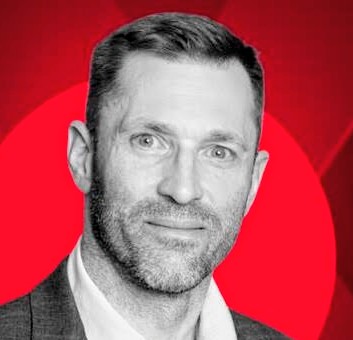
My TEDxWarrington talk has gone up on the TEDx channel. It's fourteen minutes long and it's the most personal thing I've said on a stage, and it's built around a single line I've been carrying for thirty years. The video is at the bottom. Here's the story.
1991
I'm seventeen and I'm hooked on computer games: Pitfall on the neighbours' Atari, Horace Goes Skiing on my beloved ZX Spectrum 48K. A few years earlier, a few of us had bought a computer magazine with pages of code in it and typed the whole thing into the school's BBC Model B every break, every lunchtime, and after school until the teacher threw us out. Two weeks later we pressed run. It didn't work. Two months of debugging later we pressed run again, and we were standing in the world of The Philosopher's Quest, where you can go north, get key, and open chest.
That same year a friend gets a dial-up modem. No graphics, slow, expensive, and nobody else in the house can use the phone. But you're connected to the world, even if the world is forty-two people. I remember thinking: this changes everything. Encyclopaedias, libraries, vinyl, shopping, gaming, media. I decide, there and then, to study computer science and be part of the internet revolution.
So I go to my dad. He looks me straight in the eye. Son, this internet thing isn't going to catch on. There's no future in computers. Get a proper job. Engineering. There'll always be a job for an engineer.
Off I go to study engineering. And as the internet revolution unfolded around me, I made myself a promise. The next time a technology comes along that's going to disrupt whole industries, democratise access, and speed up the rate of change itself, I'm not going to miss the boat twice.
30 November 2022
Thirty years later, OpenAI launched ChatGPT, and hundreds of millions of people got access to generative AI. It's a technology so powerful that Facebook, Amazon, and Google have spent billions catching up, Elon Musk wanted all development suspended, and Italy banned it outright, for a while.
If you want the difference between this and what came before in one picture: retrieval AI is sending someone to the library to fetch you a book. Generative AI is asking a question of someone who has read every book in the library.
Plenty of people are predicting it will matter more than the internet. I'd add that it will matter faster. The internet is basically the same technology now as in 1991, and it took thirty years to spread because it had to wait for modems, newspapers, and word of mouth. Generative AI needs no hardware and no journalist. It's on the smartphones billions of us already own, and it spreads at the speed of a viral post. So the time we have to understand it, adapt to it, and maybe steer it isn't a leisurely three decades. My guess is three to six years. Satya Nadella put it with two examples from opposite ends of the world: Andrej Karpathy, one of the best coders alive, getting a large jump in productivity, and a rural farmer in India using AI to reach government funding. This isn't only a technological revolution. It's a social and cultural one, and it's breaking faster than the wave before it.
The ChatGPT challenge
Sam Altman said history will most likely remember this as the ChatGPT moment. I prefer to see it as a challenge, and I've been calling it that: the ChatGPT challenge. Disrupt or be disrupted. It's a challenge for governments, institutions, and businesses, but in the end it's a challenge for individuals. For you, and for me.
Mine arrived at two in the morning in early 2023, alone in my room, scrolling Twitter to avoid some work, finally giving in to the ChatGPT posts peppering my feed. Six hours and a lot of YouTube later, I had the 1991 feeling all over again. The calm before the storm. And as the sun came up, it felt as though it reached an arm back across those thirty years, tapped me on the shoulder, and whispered: don't miss the boat twice.
This time I didn't ask my father. I backed my own judgement, and that decision is what put me on that stage.
What if I just ignore it?
I know that's what some of you are thinking, so I said it out loud. I believe it will find you. If your organisation hasn't felt it yet, that's only because nobody in your market has built something better with it yet. If your job hasn't felt it yet, that's only because your boss hasn't worked out what AI could do to your role. If your personal life hasn't felt it yet, that's only because nobody has used it to impersonate you and scam your grandparents.
The pilot in the storm
So what can you do, if Altman and Nadella don't know how it ends either? There's a theory called effectuation, developed by Saras Sarasvathy, and at its heart is an image I love. A pilot flies into a storm. The plane is at the mercy of the weather, and the pilot knows it. So they don't try to control the storm. They control the throttle under their palm, the altitude of the plane, and the calm they bring to the crew and the passengers.
We're all that pilot now. What can you control? Accept the change. Learn, and grow. Yes, it's a leap into the unknown, and no, you won't know where you'll land. AI is here and it isn't going away, and once you accept that and make it your purpose to learn and explore, you're not facing a threat any more. You're setting out on an adventure.
You can control the first steps. As for the ending, it wouldn't be an adventure if you knew it.
Watch the talk
Where will your ChatGPT challenge take you? If you'd like to talk about the first steps, get in touch.
Rob Dixon speaks and writes on AI, strategy, change, and innovation, and works with organisations on building AI capability.


Comments